Introduction: Why Custom Silicone Products Are in High Demand
Custom silicone products have become a rising trend in the modern market, both because of the durability, safety and environmentally friendly properties of silicone and because of its versatility and performance. Since silicone can be customized in mats to take shapes with high heat bakability, silicone can be customized in phone cases to provide shock protection as well as branding capabilities.
The need to customize silicone products is driven by the fact that silicone is a unique product due to its flexible nature, non-toxic, heat resistant, and can be customized in a manner unavailable in any other product like plastics or rubber. Customization is free, however, and complex. Such pitfalls as the lack of proper material choice or design issues may result into delayed production and higher costs or failure of products.
Mistake 1: Choosing the Wrong Type of Silicone Material

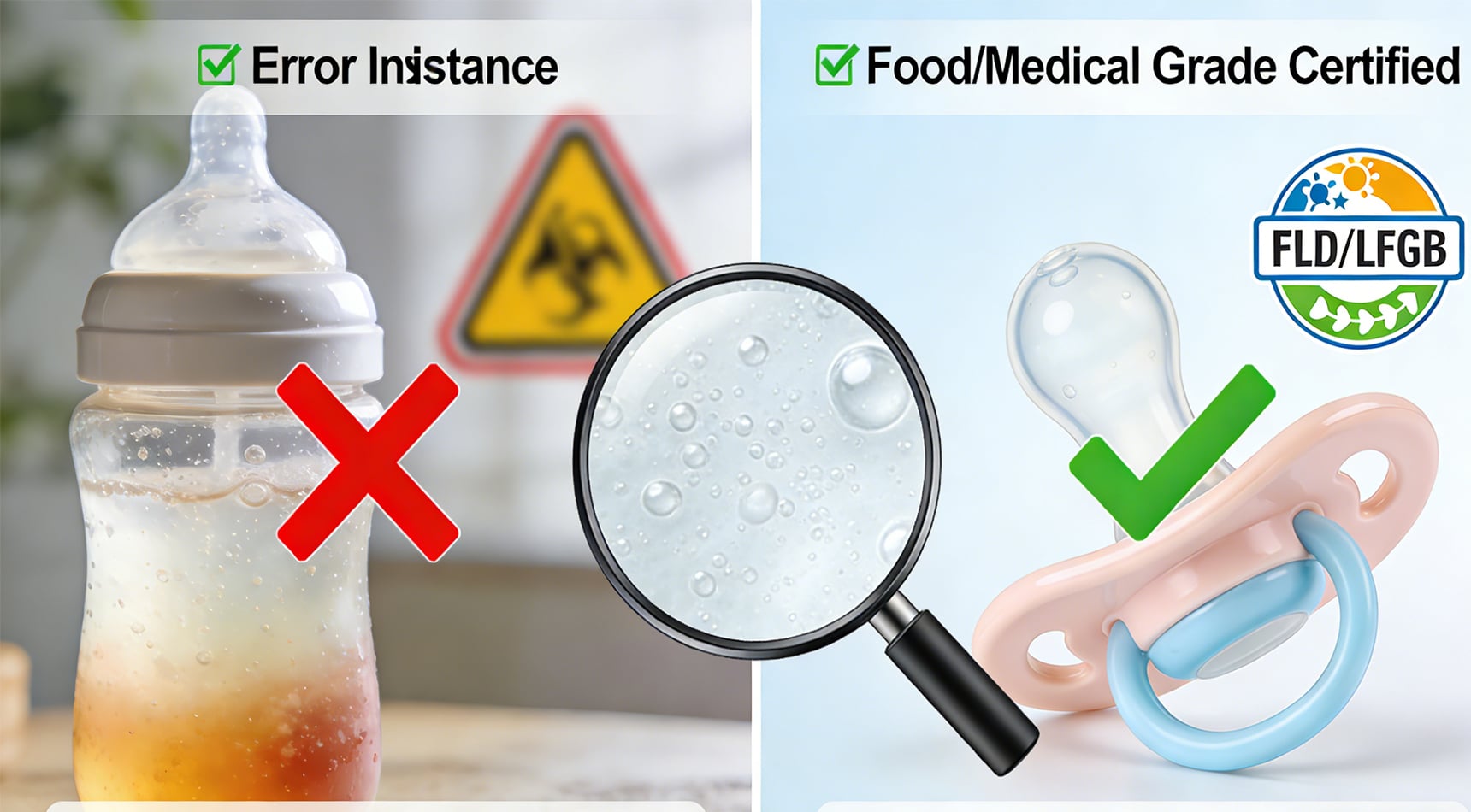
Among the most frequent errors when customizing silicone products is the incorrect choice of silicone grade to be used in the product and this may cause failure of the product or safety problems. Not every silicone on the market is the same product, as silicone is available in a variety of types such as food grade, medical grade or industrial grade, and each has particular characteristics. An example is that the custom silicone bottle that involves the use of standard silicone rather than food-grade may have an odor absorbed or fail to comply with regulations, which leads to recalls.
As we have found at Haotian Silicone, customers do not always pay as much attention to such aspects as temperature resistance or chemical compatibility. Food grade vs industrial silicone is a very important difference: Food-grade, which meets the requirements of both FDA/LFGB is a crucial factor to consider in the case of baby products or kitchenware so that no toxic substances are leached. Gaskets may be considered a priority of industrial silicone in terms of heat resistance. Advice: Have your application requirements noted always and do ensure that you test materials with the manufacturer. We are offering samples to check the correct types of silicone materials and prevent expensive revisions.
Mistake 2: Overcomplicated or Unrealistic Product Design
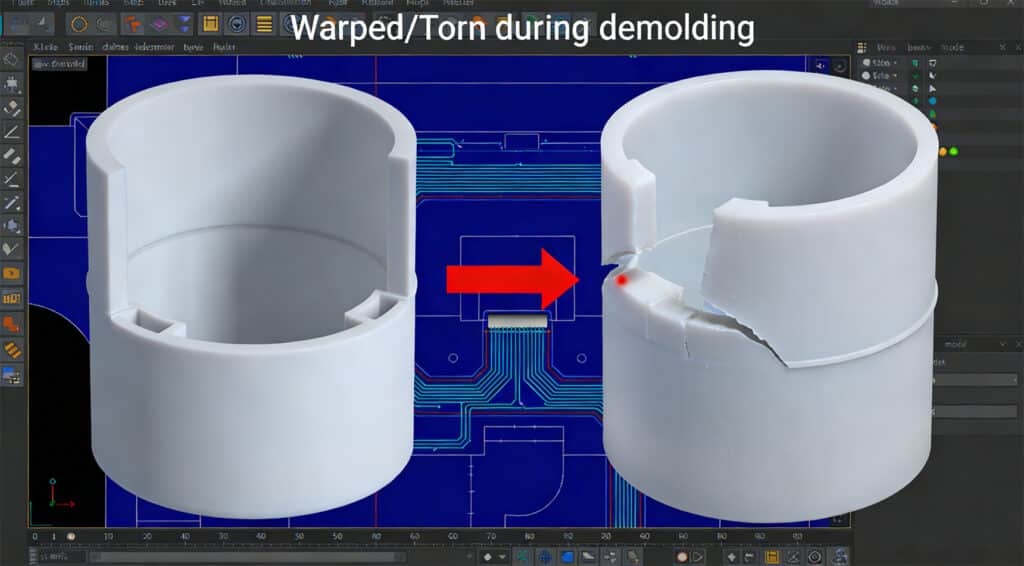
Companies that are innovative can inadvertently design overcomplicated designs that have too many thin walls, undercuts, or features and therefore result in molding failures such as unfinished fills or tearing. Mistakes in product design (in silicone), this is frequently due to the failure to take into account manufacturability, silicone flows not like plastic and complex shapes can trap air or cure unevenly.
In our factory, we have witnessed line of projects that have been postponed due to the designs that did not take into consideration the mold release angles or shrinkage rates (1-3% is a common silicone shrinkage rate). An example of this is a custom phone case made of silicone that has too many details in it and thus becomes warped during demolding. Suggestion: where feasible, simplify and engage engineers during the phase of designing the mold. Test feasibility with 3D simulations Haotian Silicone team will provide this to optimize custom silicone engineering before tooling to save time and costs.
Mistake 3: Ignoring Mold Design and Tooling Quality
Ineffective design of the mold is a silent killer in customization that leads to inconsistencies such as flash, bubbles, or dimensional errors. Most purchasers do not adequately assess the quality of tooling and instead purchase inexpensive molds which wear out too soon or extravagantly manufacture inferior components.
Accuracy is the most important in the CNC silicone molding process, and as such our workshop stock is made of high grade steel, durable enough to guarantee tolerances of +-0.05 mm. In the case of multi-color objects, the lack of proper venting may result in a color bleeding. Recommendation: Invest into good tooling and demand mold validation sample. At Haotian Silicone, we have patented process which guarantees that silicone mold designs are so good that such problems are avoided at the very outset.
Mistake 4: Poor Color Matching and Inconsistent Pigmentation
The use of color is very important in branding, however, pigmentation will result in fading or irregularities. Brands tend to give codes of Pantone without regard to the reaction of silicone with pigments thus giving off-shades upon drying.
The color matching process with silicone needs accuracy in ratios since heat can change the color. In our case, the variation in batches is brought about by inconsistent mixing. Recommendation: Masterbatch systems should be utilized and cured samples should be approved. Our multi-color silicone materials guarantee uniformity of pigments silicone, and their pigments do not fall into this trap.
Mistake 5: Overlooking Tolerance and Shrinkage in Silicone Parts
Silicone contracts between 1-3 percent when it is curing but most architectural designs do not take this into consideration resulting in loose fits or misalignments. In the case of a custom rubber gasket, this may lead to leakages.
Silicone shrinkage rate is formula-dependent-HCR shrinkage rate is higher than LSR. Recommendation: Adapt CAD dimensions to compensate and prototype tests. Our team does the tolerance control silicone computation whereby the product is produced.
Mistake 6: Neglecting Testing and Quality Control Procedures
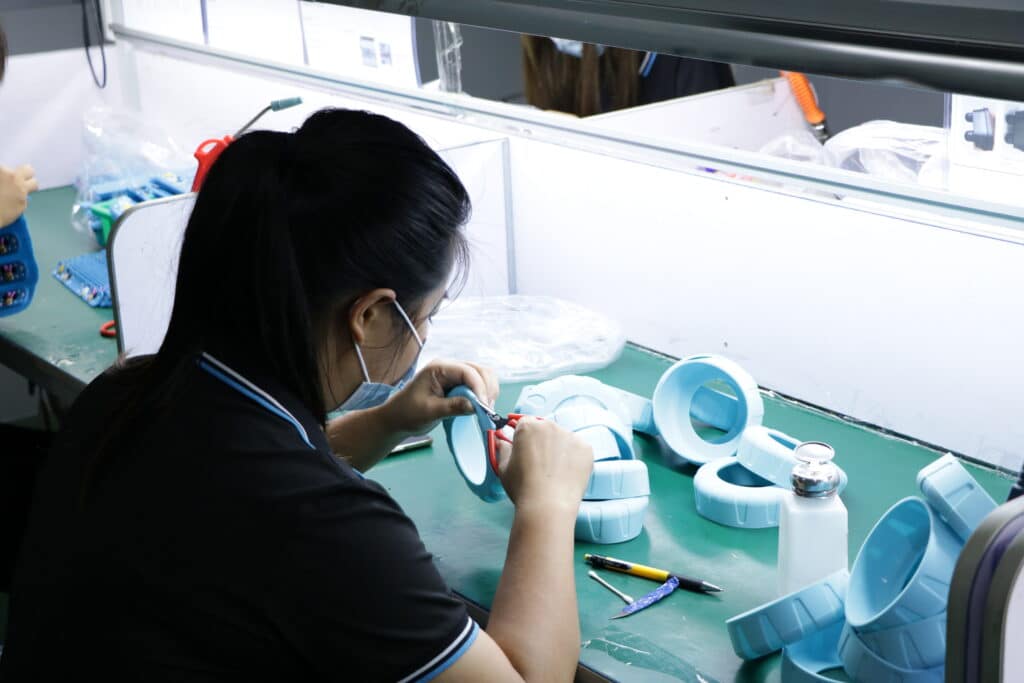
Omission on QC causes flaws such as poorly sewn or stinking seams. Hardness (Shore A), tensile strength and heat resistance are important tests.
We inspect each batch at Haotian Silicone in silicone quality tests. Recommendation: require comprehensive QC process reporting of silicone factory and such certifications as ISO9001. This is a guarantee of compliance and performance.
Mistake 7: Focusing Only on Price, Not Capability
Low quotes can be translated to inferior materials or cost cutting. Quality-conscious factories invest on technology and quality control, which explains optimal price.
In case of OEM ODM factory China, consider capability rather than cost. Recommendation: Compare on a sample and references. We have our value at Haotian Silicone, which is; consistent delivery and creativity.
Mistake 8: Ignoring Compliance and Certification Requirements
The neglect of such certs as FDA in food-grade products results in rejections. Silicone manufacturer is certified which guarantees market reach.
Recommendation: Early check compliance of FDA LFGB. Safe and compliant products are ensured in our audits of Haotian Silicone.
Mistake 9: Insufficient Communication During Development
The ineffective communication leads to misunderstanding such as misplaced logos. China Supplier communication is critical to the international buyers.
Suggestion: Plan frequent updates and make use of tools to make it clear. Our team will provide focused support of tailor-made project management.
Mistake 10: Not Requesting Pre-Production Samples
Mass errors are a possibility of omitting samples. Design is checked by silicone pre-production sample.
Advice: It is always advisable to approve first before production. Alignment is guaranteed by our prototype testing silicone.
Mistake 11: Forgetting Post-Production Details (Packaging & Shipping)
Packaging is not taken seriously and the result is damage. Brands and protection Custom packaging.
Suggestion: Furnish environmentally friendly alternatives. Silicone packaging practices are export safe.
Conclusion: Turning Mistakes into Smart Manufacturing Strategy
Silicone customization involves being vigilant but when it is avoided, it will be successful. At Haotian Silicone, we are an OEM/ODM partner with loyalty and lead clients on, with our Four Hearts spirit. Let us collaborate: contact us so that we can make you successful.
SEO Title:
Common Mistakes to Avoid When Customizing Silicone Products
Meta Description:
Learn the top mistakes brands make when customizing silicone products — from design flaws to material selection — and how to avoid them for better quality, performance, and cost efficiency.
Excerpt:
Custom silicone products offer endless possibilities — but small design or material mistakes can lead to costly delays. This guide shares expert tips from a manufacturer’s perspective on how to get customization right from the start.