How to Communicate Your Custom Silicone Project Requirements Effectively
Introduction: Why Clear Communication Determines Project Success
The world of custom silicone production has seen some of the most complex projects such as multi-color wristbands or even fine rubber gaskets, and communication is the biggest issue that can make the difference between a production process that runs smoothly and one that is characterized by the number of rewrites and extra expenses.
Miscommunication may cause problems such as incorrect choice of material, faulty moulds or even uneven colors which not only consumes time, it may harm the brand name as well. On the other hand, good communication fosters confidence and productivity.
How to Communicate Your Custom Silicone Project Requirements Effectively
Introduction: Why Clear Communication Determines Project Success
The world of custom silicone production has seen some of the most complex projects such as multi-color wristbands or even fine rubber gaskets, and communication is the biggest issue that can make the difference between a production process that runs smoothly and one that is characterized by the number of rewrites and extra expenses.
Miscommunication may cause problems such as incorrect choice of material, faulty moulds or even uneven colors which not only consumes time, it may harm the brand name as well. On the other hand, good communication fosters confidence and productivity.
Understand the Manufacturer’s Perspective
When the manufacturer puts it in perspective, it is the communication to make what you see what we do. The production of silicone is a complicated process that consists of various interrelated steps, such as design validation, tooling, preparation of materials, setting of the mold, curing, printing, and packaging, which is a complex process that needs a detail that cannot be done wrong. In the example of unclear specifications on hardness, one may get product which is either too soft to be industrial or too hard to be baby.
Haotian Silicone is dependent on client feedback to convert ideas into something realizable, through our patented multi-color process on complex designs. Communication is two way: You specify what you want, such as a custom silicone phone case with grip texture, and we will give you a response on what is possible, such as adjusting the molds to flow better. Such silicone OEM cooperation helps to avoid the expensive reworking and create long-term partnerships as in our collaboration with Disney and Huawei.
Provide a Detailed Product Description
The beginning of any custom silicone project is a well-designed product description, which predetermines its success. Start with the fundamentals: What is the role of the product? Is it a baking silicone mat, a rubber gasket to seal or a travel bottle? State the application, food-contact needs food-grade silicone, and electronics need non-conductive ones.
Include anticipated performance: Temperature range, flexibility or load bearing. In the case of a custom silicone bottle, remember whether the bottle must be collapsible or airtight. This assists us to prescribe appropriate compounds. Recommendation: to make it clear use bullet points or table and make sure that the description is in line with your brand objectives. This product specification silicone step in our case does not make any assumptions and simplifies the quoting.
Share Technical Drawings or 3D Files Whenever Possible
Technical drawings/3D files do away with ambiguity and give a blue print of what is to be produced. In the silicone products, 2D CAD drawings are to contain dimensional, tolerances, and cross-sections and 3D files, such as STEP or IGES, can be simulated.
In their absence, errors arise such wrong location of holes in a gasket. We are capable of 3D modeling silicone parts using sketches in case you do not have files. Recommendation: Make notes on important areas on files and hand out reference photos. This manufacturing technical documentation guarantees accuracy at the very beginning.
Specify Material Requirements and Certifications
It is important to specify material to comply with the safety and performance requirements. Specify whether food-grade (FDA/LFGB), medical-grade or industrial. As an example, UV-resistant silicone may be required in a custom phone case of silicone.
Add certifications such as RoHS in the electronics and EU markets such as REACH. Lack of clear specifications may result in non-compliance. Recommendation: List requirements Early- our team checks with samples. This silicone material specification delivers certified safe products.
Define Color and Surface Requirements
Aesthetics are characterized by color and surface and ambiguous requests confuse matches. Include Pantone color matching codes that are exact in silicone color, include finishes such as matte or glossy.
In case of multi-color items, place order of layers to prevent bleeding. Suggestion: Accept fixed samples, because heat has the ability to change shades. We also have color consistency.
Clarify Dimensional Tolerances and Fit Requirements
Dimensional accuracy is crucial–silicone will contract 1-3 percent in the curing process so specify tolerances (+-0.05 mm to achieve accuracy). Record assembly requirements.
Ignoring this results in loose or tight spots. Recommendation: Compensate the shrinkage of drawings. To do the fit and functional silicone design, our team calculates.
Discuss Mold Development and Sampling Process
Discussions of mold avoid surprises-just tell what material (steel to last long) and how much space (cavities). Agree on lead times in case of custom tooling OEM.
Recommendation Review mold design and sample approval. This is facilitated in our in-house workshop.
Set Clear Expectations for MOQ, Lead Time, and Packaging
Clear up MOQ, lead time and packaging early to eliminate delays. In the case of silicone production, lead time, include tooling (4-6 weeks).
Branding is improved through custom packaging. Recommendation: PO Inclusion to align.
Establish a Communication Schedule
Projects are managed by a schedule, weekly or monthly reports on the progress, with photos.
Suggestion: Real-time communication should be performed with the help of such tools as email or WeChat. There is transparency through our committed managers.
Use Reference Samples for Clarity
Reference cases explain the expectations- send like products to benchmark.
This helps in matching of texture or color. Recommendation: Supply descriptions. We employ them in precise replication.
Document Every Detail in Written Form
Forms and other written records such as POs eliminate conflict-specifications, schedules, and conditions.
Recommendation: version control changes. This technical project silicone agreement secures both parties.
Cultural and Language Considerations When Working with Chinese Manufacturers
When marketing to foreign consumers, time zones and the use of clear English is to be observed. Visual aids are annotated in order to fill in gaps.
Recommendation: Patience and ensure comprehension. We have a bilingual staff that promotes cross-cultural manufacturing.
Conclusion: Communication is the Foundation of a Successful Silicone Project
The success of customization is based upon communication- transparent and comprehensive communication creates confidence and effectiveness. At Haotian Silicone, we are a reliable silicone factory in China; therefore, we focus on this as a requirement towards OEM/ODM. Get in touch with us–we are the team that makes the projects run smoothly.SEO Title:
How to Communicate Your Custom Silicone Project Requirements Effectively
Meta Description:
Learn how to communicate your custom silicone project requirements clearly. This guide covers specifications, drawings, samples, and communication tips to ensure smooth OEM/ODM production.
Excerpt:
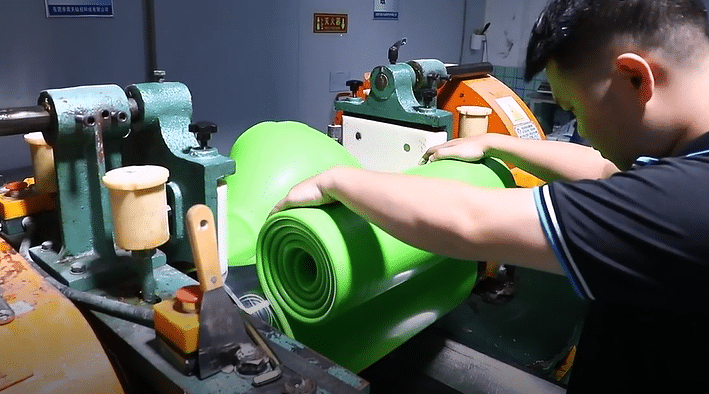
Factory worker inspecting a roll of raw green silicone material, illustrating the importance of clearly specifying material requirements and grades (such as food-grade or industrial) at the start of a custom silicone project to ensure quality and compliance.
Understand the Manufacturer’s Perspective
When the manufacturer puts it in perspective, it is the communication to make what you see what we do. The production of silicone is a complicated process that consists of various interrelated steps, such as design validation, tooling, preparation of materials, setting of the mold, curing, printing, and packaging, which is a complex process that needs a detail that cannot be done wrong. In the example of unclear specifications on hardness, one may get product which is either too soft to be industrial or too hard to be baby.
Haotian Silicone is dependent on client feedback to convert ideas into something realizable, through our patented multi-color process on complex designs. Communication is two way: You specify what you want, such as a custom silicone phone case with grip texture, and we will give you a response on what is possible, such as adjusting the molds to flow better. Such silicone OEM cooperation helps to avoid the expensive reworking and create long-term partnerships as in our collaboration with Disney and Huawei.
Provide a Detailed Product Description
The beginning of any custom silicone project is a well-designed product description, which predetermines its success. Start with the fundamentals: What is the role of the product? Is it a baking silicone mat, a rubber gasket to seal or a travel bottle? State the application, food-contact needs food-grade silicone, and electronics need non-conductive ones.
Include anticipated performance: Temperature range, flexibility or load bearing. In the case of a custom silicone bottle, remember whether the bottle must be collapsible or airtight. This assists us to prescribe appropriate compounds. Recommendation: to make it clear use bullet points or table and make sure that the description is in line with your brand objectives. This product specification silicone step in our case does not make any assumptions and simplifies the quoting.
Share Technical Drawings or 3D Files Whenever Possible
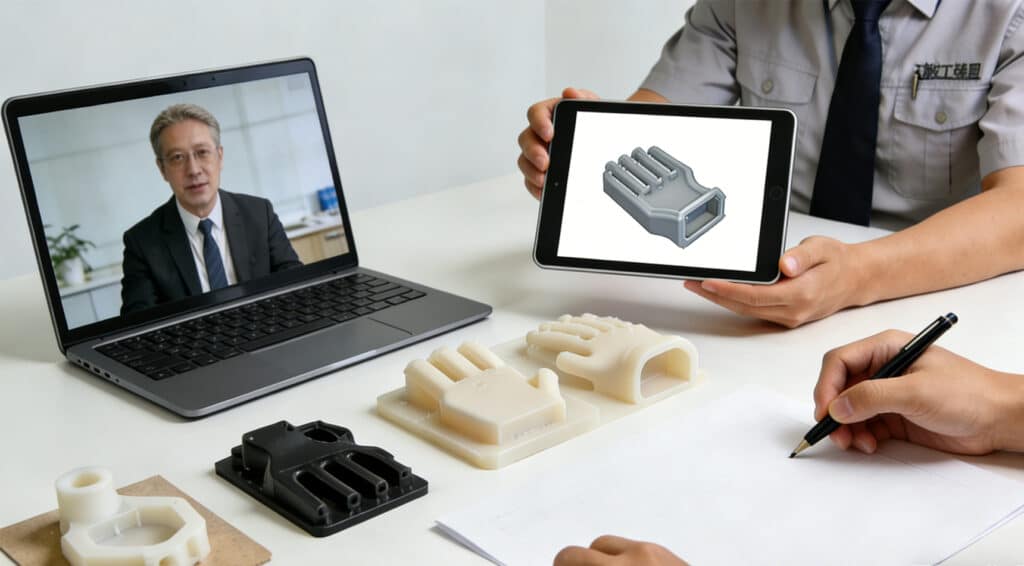
International team reviewing custom silicone product designs via video conference, using 3D models, technical drawings, and prototypes to clarify specifications and ensure accurate mold development in OEM ODM projects.
Technical drawings/3D files do away with ambiguity and give a blue print of what is to be produced. In the silicone products, 2D CAD drawings are to contain dimensional, tolerances, and cross-sections and 3D files, such as STEP or IGES, can be simulated.
In their absence, errors arise such wrong location of holes in a gasket. We are capable of 3D modeling silicone parts using sketches in case you do not have files. Recommendation: Make notes on important areas on files and hand out reference photos. This manufacturing technical documentation guarantees accuracy at the very beginning.
Specify Material Requirements and Certifications
It is important to specify material to comply with the safety and performance requirements. Specify whether food-grade (FDA/LFGB), medical-grade or industrial. As an example, UV-resistant silicone may be required in a custom phone case of silicone.
Add certifications such as RoHS in the electronics and EU markets such as REACH. Lack of clear specifications may result in non-compliance. Recommendation: List requirements Early- our team checks with samples. This silicone material specification delivers certified safe products.
Define Color and Surface Requirements
Aesthetics are characterized by color and surface and ambiguous requests confuse matches. Include Pantone color matching codes that are exact in silicone color, include finishes such as matte or glossy.
In case of multi-color items, place order of layers to prevent bleeding. Suggestion: Accept fixed samples, because heat has the ability to change shades. We also have color consistency.
Clarify Dimensional Tolerances and Fit Requirements
Dimensional accuracy is crucial–silicone will contract 1-3 percent in the curing process so specify tolerances (+-0.05 mm to achieve accuracy). Record assembly requirements.
Ignoring this results in loose or tight spots. Recommendation: Compensate the shrinkage of drawings. To do the fit and functional silicone design, our team calculates.
Discuss Mold Development and Sampling Process
Discussions of mold avoid surprises-just tell what material (steel to last long) and how much space (cavities). Agree on lead times in case of custom tooling OEM.
Recommendation Review mold design and sample approval. This is facilitated in our in-house workshop.
Set Clear Expectations for MOQ, Lead Time, and Packaging
Clear up MOQ, lead time and packaging early to eliminate delays. In the case of silicone production, lead time, include tooling (4-6 weeks).
Branding is improved through custom packaging. Recommendation: PO Inclusion to align.
Establish a Communication Schedule
Projects are managed by a schedule, weekly or monthly reports on the progress, with photos.
Suggestion: Real-time communication should be performed with the help of such tools as email or WeChat. There is transparency through our committed managers.
Use Reference Samples for Clarity
Reference cases explain the expectations- send like products to benchmark.
This helps in matching of texture or color. Recommendation: Supply descriptions. We employ them in precise replication.
Document Every Detail in Written Form
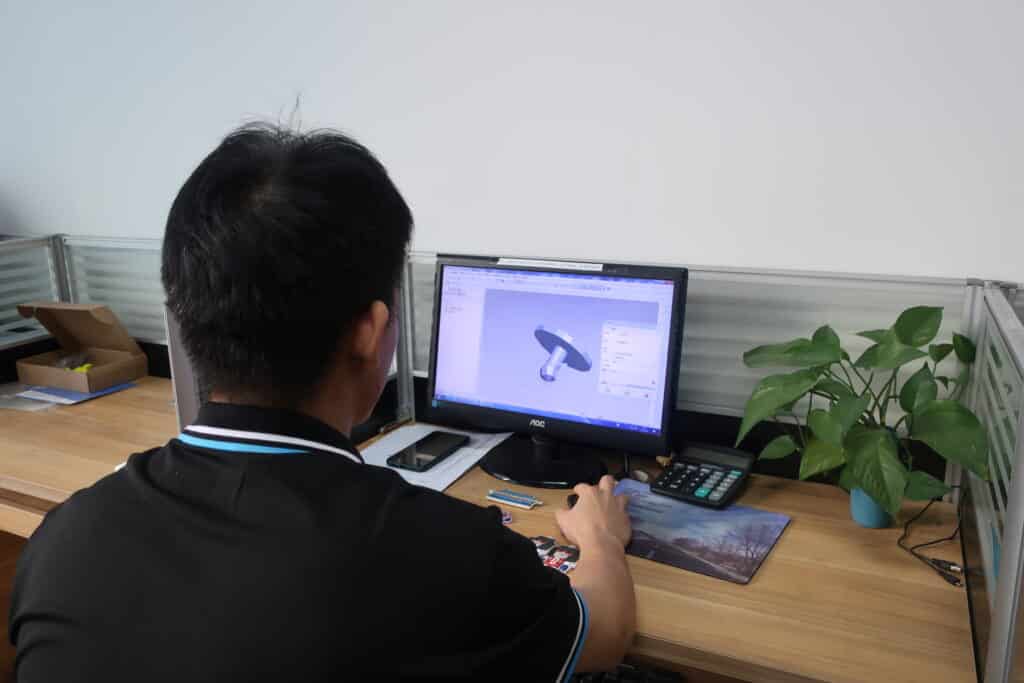
Engineer working on 3D CAD modeling for a custom silicone part, demonstrating how detailed technical documentation and precise dimensional tolerances are converted from client requirements into manufacturing blueprints.
Forms and other written records such as POs eliminate conflict-specifications, schedules, and conditions.
Recommendation: version control changes. This technical project silicone agreement secures both parties.
Cultural and Language Considerations When Working with Chinese Manufacturers
When marketing to foreign consumers, time zones and the use of clear English is to be observed. Visual aids are annotated in order to fill in gaps.
Recommendation: Patience and ensure comprehension. We have a bilingual staff that promotes cross-cultural manufacturing.
Conclusion: Communication is the Foundation of a Successful Silicone Project
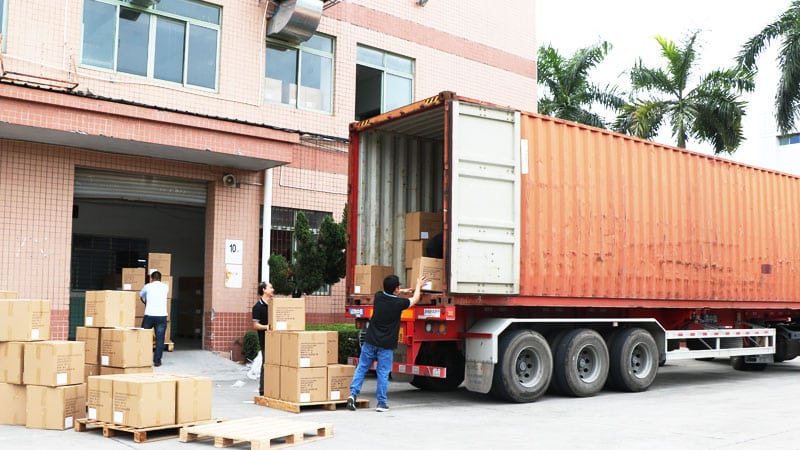
Loading finished custom silicone products into a shipping container for global delivery, representing the successful outcome of clear communication regarding lead times, packaging requirements, and logistics in international trade.
The success of customization is based upon communication- transparent and comprehensive communication creates confidence and effectiveness. At Haotian Silicone, we are a reliable silicone factory in China; therefore, we focus on this as a requirement towards OEM/ODM. Get in touch with us–we are the team that makes the projects run smoothly.
SEO Title:
How to Communicate Your Custom Silicone Project Requirements Effectively
Meta Description:
Learn how to communicate your custom silicone project requirements clearly. This guide covers specifications, drawings, samples, and communication tips to ensure smooth OEM/ODM production.
Excerpt:
Effective communication can make or break a custom silicone project. This article explains what details to share with your manufacturer, how to organize specifications, and how to collaborate efficiently from design to delivery.
Kevin Gan
Meet Kevin Gan, the visionary CEO of Dongguan Haotian Silicone Technology Co., Ltd. With a passion for customization and a drive for customer satisfaction, Kevin leads our company in delivering exceptional custom silicone products. With his expertise and unwavering commitment to excellence, Kevin ensures that every client receives personalized solutions that exceed expectations.
We use cookies to ensure that we give you the best experience on our website. If you continue to use this site we will assume that you are happy with it.